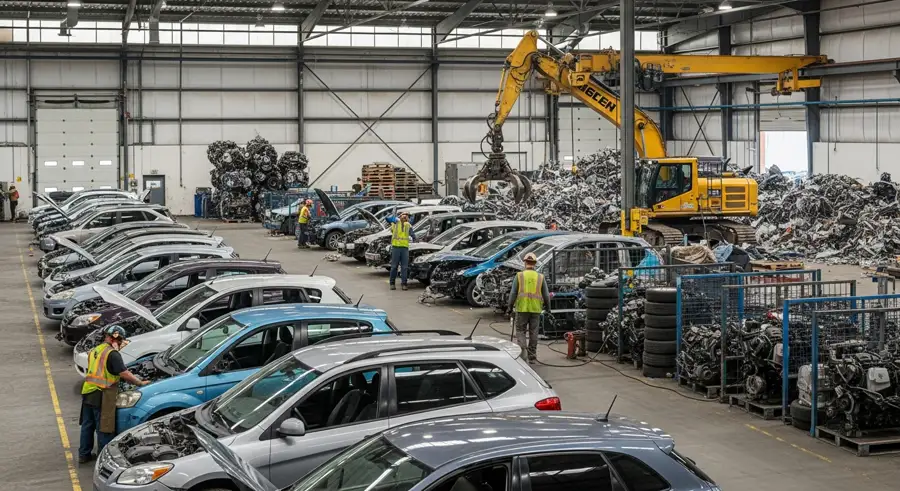
When most people think of "scrapping a car," they picture crushed metal in a dirty junkyard. The reality is quite different — modern vehicle recycling in British Columbia is a highly regulated, environmentally responsible process that recovers nearly every component of your old car. Here's what actually happens when you sell your scrap car.
Step 1: Fluid Draining and Hazardous Material Removal
The first thing a licensed recycler does is drain all vehicle fluids before any dismantling takes place. This includes:
- Engine oil and transmission fluid
- Coolant and antifreeze
- Brake fluid and power steering fluid
- Gasoline and diesel fuel
- Air conditioning refrigerant (requires certified recovery equipment)
- Battery acid from lead-acid batteries
These fluids are collected separately and sent to certified waste processors. Recycled oil is re-refined into new lubricating oil. Coolant is filtered and reused. None of these materials end up in the ground or local waterways when the process is done correctly.
Step 2: Parts Salvage
Before a vehicle is crushed, usable components are carefully removed. This extends the life of parts that still have value and reduces the demand for newly manufactured replacements. Common salvaged parts include:
- Engines and transmissions (if functional or repairable)
- Catalytic converters (for precious metal recovery)
- Alternators, starters, and other electrical components
- Doors, hoods, and body panels (for repair shops and collision centres)
- Tires and wheels
- Seats and interior trim
- Lights and mirrors
In BC, many of these parts enter the used auto parts market, which is both economically and environmentally beneficial — a used part requires zero new manufacturing energy.
Step 3: Tire and Battery Recycling
Tires that can't be reused are recycled through BC's provincial tire stewardship program. They're shredded and turned into rubber crumb for playgrounds, running tracks, and asphalt. Lead-acid batteries are recycled with a 97–99% recovery rate — nearly every component (lead plates, acid, plastic casing) is processed and reused in new batteries.
Step 4: Metal Shredding and Steel Recycling
After all fluids and salvageable parts have been removed, the remaining shell is crushed and sent to a metal shredder. The shredded material — called "auto shred" — is sorted by type: steel, aluminum, copper, and other non-ferrous metals. These are sold to steel mills and foundries where they're melted down and turned into new steel products.
Recycling steel uses approximately 75% less energy than producing new steel from raw iron ore. An average vehicle contains roughly 800 kg of steel, meaning your scrapped car contributes meaningfully to reducing mining activity and energy consumption.
What About the Parts That Can't Be Recycled?
A small percentage of automotive materials — certain plastics, composites, and foam — are harder to recycle economically. These materials, called "auto shredder residue" (ASR), currently end up in landfill in most jurisdictions, though research is ongoing to develop better recycling pathways. The auto recycling industry continues to improve its ASR recovery rate year over year.
The Environmental Case for Scrapping Old Vehicles
Old, poorly maintained vehicles are significantly more polluting than modern ones. A 15-year-old car that burns oil, leaks fluids, or has a failing catalytic converter contributes far more emissions per kilometre than almost any new vehicle — including SUVs. Getting an old, high-emission vehicle off the road is itself an environmental benefit.
When you sell your scrap car to a licensed BC recycler, you're not just getting cash for something you don't need — you're ensuring that vehicle's materials are responsibly recovered, preventing toxic fluid contamination, keeping usable parts in circulation, and contributing steel back to a low-energy circular economy.
Choosing a Responsible Recycler in Langley
Not all scrap car buyers operate to the same standard. Look for buyers who work with licensed BC recyclers and can confirm they follow proper fluid disposal and parts salvage procedures. At Cash for Scrap Cars Auto Removal Langley, we partner exclusively with licensed auto recyclers in the Fraser Valley. Call us at (604) 401-8046 — we offer free pickup throughout Langley, Surrey, Abbotsford, and the region.