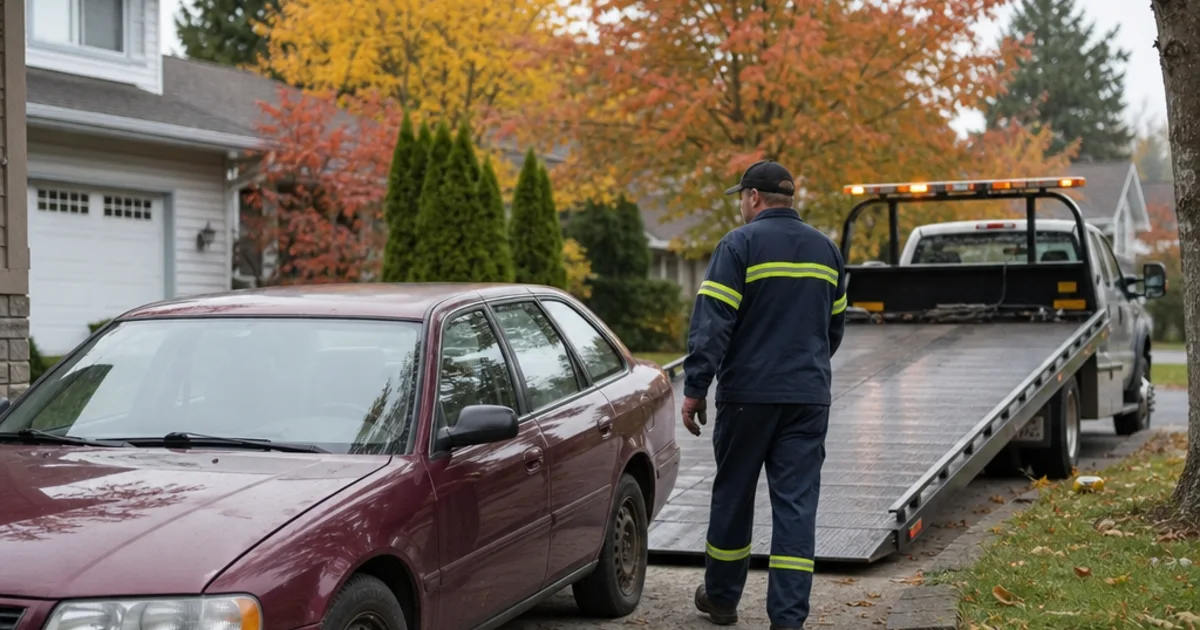
You turn the key and hear nothing. Or the engine cranks, but the car hasn't moved under its own power in months. If you're ready to sell it, the obvious worry is how anyone is going to get it out of the driveway.
A vehicle doesn't have to run to be considered for removal. But 'doesn't run' can describe several different situations, and each affects the collection plan. The most helpful thing you can do isn't buy another battery. It's explain what the car can and cannot do.
Starting, rolling, and steering are different questions
A car with an engine fault may still roll freely and steer normally. Another vehicle may start but have a failed transmission. A car that has been parked for years may have seized brakes or flat tires. These aren't interchangeable problems when loading a vehicle.
If you know the wheels won't turn, say so. If you don't know, say that too. There is no need to release the brakes on a slope or try pushing a heavy car alone to find out. The removal team can explain what information is useful and assess the next step.
- Does the engine start, or when did it last run?
- Can the car roll, steer, and shift out of park?
- Are all wheels present, and are the tires inflated?
- Do you have the keys?
- Is there collision damage, a fluid leak, or a known electrical fault?
Do you need to repair it before selling?
Not necessarily. Spending money on a fault purely to prepare for a removal quote may not improve the amount you receive enough to justify the work. A buyer can assess a vehicle in non-running condition if you describe it accurately.
That doesn't mean every non-starting car should be scrapped. If you haven't decided to let it go, a proper diagnosis may reveal a repair worth doing. Separate the two questions: 'Should I keep this car?' and 'Does it need to run for collection?'
Location can be more important than the engine
An open, level driveway gives the driver a different job from a cramped garage or a space beneath a low parkade ceiling. Photos showing the vehicle and the access around it can help. Include the approach to the car rather than sending only a close-up of the bonnet.
Around Langley, pickups can involve shared townhouse lanes, residential driveways, business lots, or rural properties. Mention gates, restricted parking, narrow turns, and other vehicles that block access. If collection is from a strata property, find out who needs to authorize the truck's access.
Avoid turning a collection problem into a safety problem
Don't tow a disabled car with a rope, improvise a loading ramp, or crawl underneath an unsupported vehicle. Avoid repeated starting attempts if you suspect an electrical problem or fuel leak. Tell the collection team about the concern and ask how to proceed.
For a damaged hybrid or electric vehicle, mention the vehicle type and any known battery damage. Don't touch exposed high-voltage components. Such vehicles can need a specialist assessment and a different collection arrangement.
What a useful quote conversation sounds like
'It's a 2008 sedan in Brookswood. It hasn't started since spring, the rear tires are flat, and it's on a level driveway behind our other car. I have the keys and registration.' That description is far more helpful than 'It's broken—can you take it?'
We can discuss non-running car removal in Langley without asking you to get the vehicle running first. Call or text (604) 401-8046 with what you know about its condition and location. We'll confirm whether pickup is possible, what access is needed, and an offer with towing included.