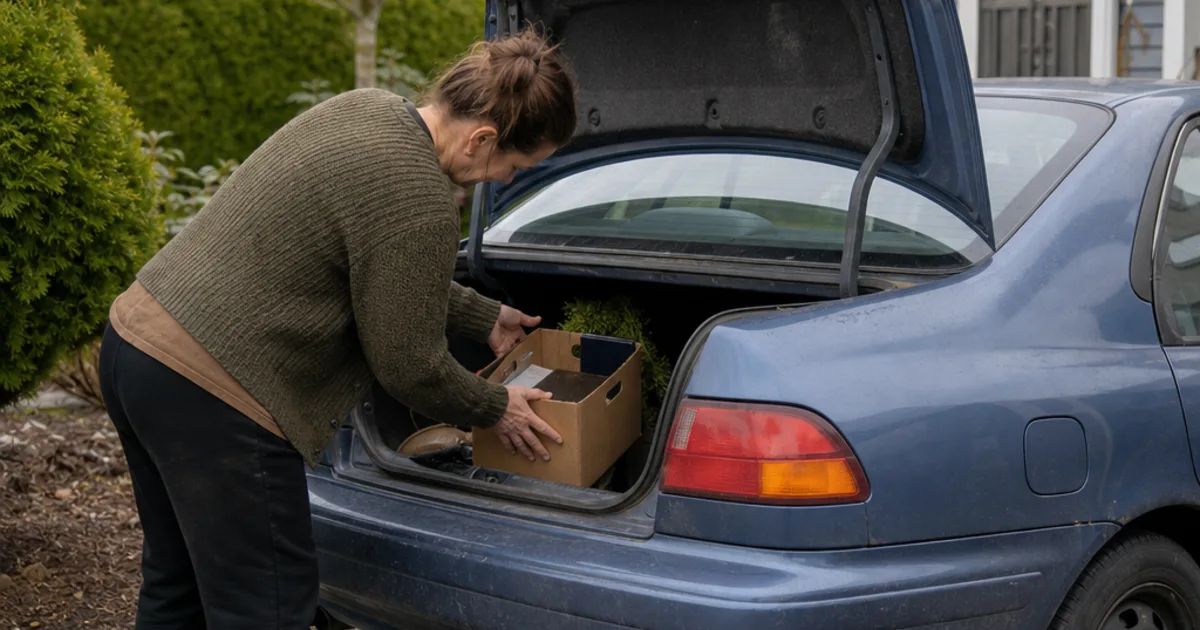
You've accepted the offer and booked the pickup. The car is finally leaving. Before you hand it over, take ten quiet minutes to look through it—not because it needs to be spotless, but because the things you forget are usually the things you wanted to keep.
Cars become storage spaces without anyone planning it. A garage remote, a spare pair of glasses, an old insurance document, or a child's favourite toy can sit unnoticed for months. Once the vehicle has gone, getting those items back may be difficult or impossible.
Empty it methodically, not just visibly
Start at the driver's door and work around the car. Check the console, glovebox, sun visors, door pockets, and spaces beside and beneath the seats. Then open the trunk and look beneath its floor panel if it is safe and accessible. Don't forget a roof box or anything stored in a pickup bed.
- Wallets, identification, insurance documents, and papers with personal information
- Garage remotes, house keys, parking passes, and access fobs
- Child seats, tools, charging cables, and sunglasses
- Items hidden in seat pockets or the spare-wheel area
- Aftermarket devices that store account or location information
If the car has a working infotainment system, remove paired phones and stored addresses using the manufacturer's instructions. Take out removable memory cards or USB drives. If a damaged vehicle can't power up, tell the buyer about any device you are concerned about rather than attempting electrical work yourself.
Confirm the paperwork before pickup day
Have your identification and vehicle registration ready, and confirm what the buyer needs to complete the transaction. If you're not the registered owner, explain your authority to act before booking. An estate vehicle, business vehicle, or car with missing documents may need additional checks.
For questions about BC registration, plates, or cancelling insurance, check with ICBC or an Autoplan broker. Removing a car and cancelling its insurance are separate tasks. Don't assume one automatically completes the other.
Describe the access the driver will actually find
A street address doesn't tell the whole story. Is the car behind a gate? Is another vehicle blocking it? Does the lane narrow beside the house? In a Willoughby townhouse complex, shared access and visitor parking may affect where a truck can stop. On a rural property, the condition of the lane matters too.
Let the collection team know if the vehicle has flat tires, seized wheels, missing wheels, or a steering issue. If it is in a garage or parkade, discuss clearance and the route out before the appointment. Don't move an unsafe car into the road just to make pickup easier.
Keep the vehicle in the agreed condition
If you remove parts after receiving a quote, you have changed what the buyer is collecting. Taking out the battery, wheels, or other components can affect both the offer and the loading plan. Ask first if you want to keep something attached to the vehicle.
Similarly, don't fill the car with household rubbish, paint tins, or unrelated scrap. These items aren't part of the vehicle sale and may need their own disposal arrangements. Let the driver know about any fluid leak or other known hazard.
Do one final walk-around together
At collection, confirm the vehicle, the paperwork, and the agreed payment arrangements before it leaves. Keep your transaction records. If anything is unclear, ask while the driver is there rather than trying to sort it out later.
Need help preparing for a Langley pickup? Call or text (604) 401-8046 with your vehicle details and any access concerns. We can discuss the offer, paperwork, and collection plan before you commit.