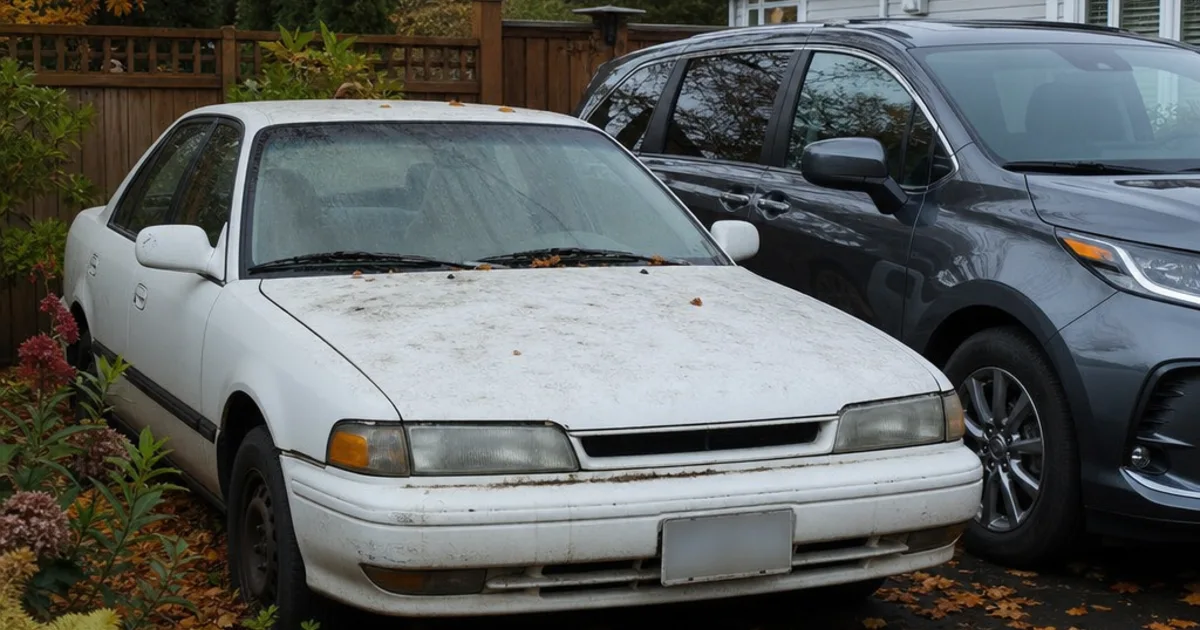
You keep it because it might come in handy. Maybe someone in the family will need it. Maybe your main car will break down. Maybe next month you'll finally get around to selling it. Meanwhile, the second car hasn't moved much, and everyone parks around it.
There's nothing wrong with keeping a spare vehicle that genuinely earns its place. The question is whether this one still does. A car that was useful when you first parked it may no longer fit your household, your space, or your budget.
Separate a real plan from a possible one
A family member starting a job next month is a plan. Someone possibly needing a car one day is a possibility. Ask when the vehicle is likely to be used, by whom, and what work it would need before then.
This isn't about pressuring yourself to clear the driveway. It's about noticing whether you're preserving a useful option or postponing a decision. If you choose to keep the car, give that choice a specific purpose and a date to review it.
Look at the costs that continue while it sits
Fuel use may be near zero, but ownership costs don't always disappear. Insurance arrangements, storage charges, parking space, and maintenance can still matter. Even an uninsured vehicle on private property may need attention to avoid deterioration.
If you are changing how the vehicle is stored or insured, check with an Autoplan broker about appropriate coverage and any obligations. Don't assume cancelling road insurance removes every financial risk associated with keeping a vehicle.
- What did you spend on this car over the past year?
- What known work would it need before regular use?
- Does it occupy a paid stall or space you need for something else?
- Would you choose to buy this same car today for the purpose you're keeping it?
A parked car is not automatically a ready backup
Long periods without use can affect batteries, tires, brakes, and other components. A car that ran when you parked it may need inspection or maintenance before returning to the road. That can make it less useful in the very emergency you're keeping it for.
Don't use a quick start in the driveway as proof that it is roadworthy. If you plan to drive it again, have its condition assessed and make sure registration and insurance arrangements are appropriate before doing so.
Keeping, selling, and recycling are different options
If the vehicle is sound and you have a clear need for it, keeping it may be reasonable. If it is a usable car you no longer need, a private sale or another used-car sale route may make more sense than treating it as scrap.
If it has major mechanical problems, significant damage, or repairs you don't intend to undertake, a buyer who considers non-running vehicles can offer another option. Get a quote based on the current condition and compare it with the effort and costs of the alternatives.
The space has value too
In a Langley townhouse or condo, an unused vehicle can occupy the only spare parking space. On an acreage, there may be more room, but the car can still block access or make maintenance harder. Reclaiming that space won't appear as cash in a quote, yet it can be a good reason to act.
Try a simple test: imagine the car has already left. Do you mostly feel worried about losing it, or relieved that you no longer have to work around it? Then check that feeling against the practical facts. Neither sentiment nor convenience should make the decision alone.
Find out what the next step would look like
You don't have to decide everything before asking questions. For a Langley vehicle removal offer, call or text (604) 401-8046 with the year, make, model, condition, and location. We can discuss a cash offer with towing included, and you can decide whether it fits your situation.