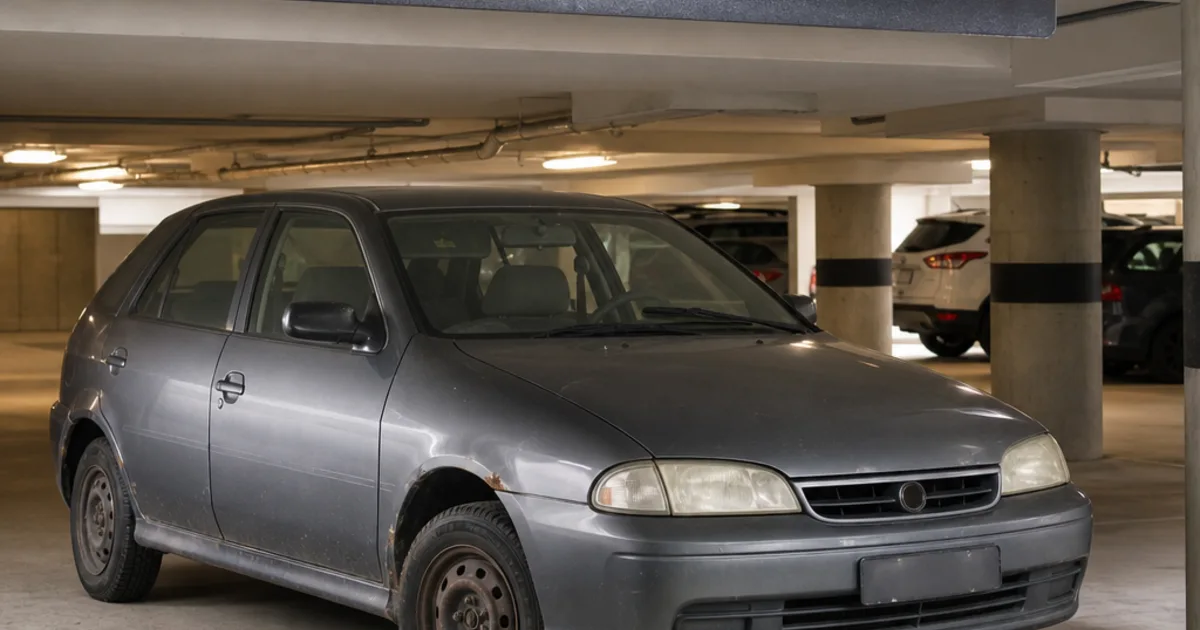
The car won't start, and it's parked two levels below the street. A full-size flatbed clearly isn't going to fit under the entrance. If you've been putting off removal because you can't see how it would work, the next step is an access assessment—not trying to push it up the ramp.
Parkade removal is not the same as a driveway pickup. Some situations can be handled with suitable equipment and a planned transfer to a loading area; others require a specialist. The company needs to confirm the actual route before promising collection.
Measure the problem before booking the truck
Start with the posted entrance clearance, but don't stop there. The lowest point may be farther inside, beneath a pipe, beam, or door mechanism. Ramps, sharp turns, and limited space around the vehicle also affect which equipment can be used.
Read the posted information and take safe photos. Don't climb onto anything to measure overhead fixtures. If clearance details are uncertain, ask the property manager for the building's access information.
- Entrance and internal height restrictions
- Which level and stall the car occupies
- Ramp slope, tight turns, and door or gate access
- Space around the vehicle and along the exit route
- A suitable authorized place for loading outside, if needed
What the car can do matters underground
A non-running vehicle that rolls and steers is a different collection problem from one locked in park with seized brakes. Tell the removal company whether you have the keys and whether the wheels are present and inflated. Don't assume a booster pack solves the access problem.
Some vehicles need specific procedures to release a transmission or parking brake. Don't force controls, dismantle the console, or attempt unfamiliar overrides yourself. Explain the model and condition so the collection team can assess the job.
Speak to the strata or property manager
You may be authorized to sell the car but still need permission for access to shared areas. Confirm arrangements with the strata, building manager, or lot owner. Find out whether there are contractor access hours, gate procedures, or requirements to protect the loading area.
If the vehicle belongs to someone else or appears abandoned, don't arrange a sale on their behalf. Ownership and authority need to be established. Property rules and disposal procedures are not replaced by an agreement with a scrap buyer.
Don't create an improvised recovery
A sloping ramp, a heavy vehicle, and other residents using the same space are a risky combination. Avoid towing with a rope, pushing the car toward an exit, or working underneath it without proper equipment. Keep emergency access clear and discuss a controlled removal plan.
If the vehicle has leaked fuel or other fluids, or you suspect damage to an electric vehicle battery, notify the building manager and collection team. Immediate safety concerns need appropriate professional attention before a routine vehicle pickup.
Understand what 'pickup available' means
A company serving your neighbourhood may still be unable to perform a particular parkade recovery. Be clear that the car is underground when requesting a quote. Ask whether assessment, specialist retrieval, or transfer to another truck would change the arrangements or the amount you receive.
For an underground or restricted-access pickup in Langley, call or text (604) 401-8046 with the vehicle details, parkade level, clearance information, and photos. We'll discuss the access and confirm whether we can arrange removal before setting a date. Not every parkade situation can be accepted.